

Filter Press for Sludge Dewatering
Reduce sludge volume, lower disposal costs, and increase the efficiency of your operation.
The CCLM Filter Press is a highly efficient solution for the dewatering of sludge from water treatment plants, wastewater treatment plants, and various industrial processes.
Through mechanical separation between solids and liquids, the equipment produces a sludge cake with a high solids content, facilitating transport, storage, and final disposal. Each system is sized according to the daily sludge generation, ensuring higher performance and excellent cost-effectiveness.
Applications
The filter press can be used in:
- Water Treatment Plants (WTPs);
- Wastewater Treatment Plants (WWTPs);
- Oily Wastewater Treatment Plants (ETEO);
- Dissolved Air Flotation (DAF/FAD) systems;
- Food industries;
- Chemical industries;
- Metalworking companies;
- Paper and pulp;
- Mining;
- Electroplating;
- Pharmaceutical industries;
- Industrial processes that generate sludge.
Why invest in a filter press?
Sludge management is among the main operational costs of a treatment plant, primarily due to transportation, storage, and final disposal.
The filter press significantly reduces sludge volume through mechanical separation of solids and liquids, forming a cake with a high concentration of solids. The result is a smaller volume for disposal, reduced logistics costs, and greater efficiency in the operation of the treatment plant.
Testimony
"After installing the CCLM Filter Press, we significantly reduced the costs of transporting and disposing of sludge."
Environmental Coordinator
Available Models
📌 Capacities sized according to daily sludge generation.
8 Benefits of Using a Filter Press:
- Significant reduction in sludge volume: Decreases the volume of waste generated, reducing storage, transportation, and final disposal costs.
- Cost savings in disposal: The smaller the volume of sludge, the lower the cost for transportation and environmentally sound disposal.
- Water recovery and reuse: Some of the separated water can return to the process or go on to further treatment stages, contributing to better use of water resources.
- High efficiency in dewatering: Produces sludge cakes with a high concentration of solids, facilitating handling and disposal.
- Automated operation: It can operate with automatic cycles, reducing the need for operator intervention.
- High durability and operational reliability: Designed for continuous operation in industrial environments, offering high durability and performance.
- Customized design: Each filter is sized according to the type of sludge, daily generation, and the client's operational needs.
- Potential for excellent return on investment: Reducing disposal costs typically provides a quick recovery of the investment made.
How does a filter press work?
- The sludge is pumped into the equipment.
- The system applies pressure to the material.
- Water passes through the filtering tissues.
- The solids remain trapped, forming a sludge cake.
- The cake is unloaded for transport or final disposal.
What is mud cake?
Sludge cake is the solid material resulting from dewatering performed by a filter press. With a lower moisture content and smaller volume, it facilitates transport, storage, and final disposal, significantly reducing operating costs.
| Origin | Application |
|---|---|
| AND | Settling tank sludge |
| THAT | Biological sludge |
| DAF | Floating mud |
| ETEO | Oily sludge |
| Industry | Physical-chemical sludge |
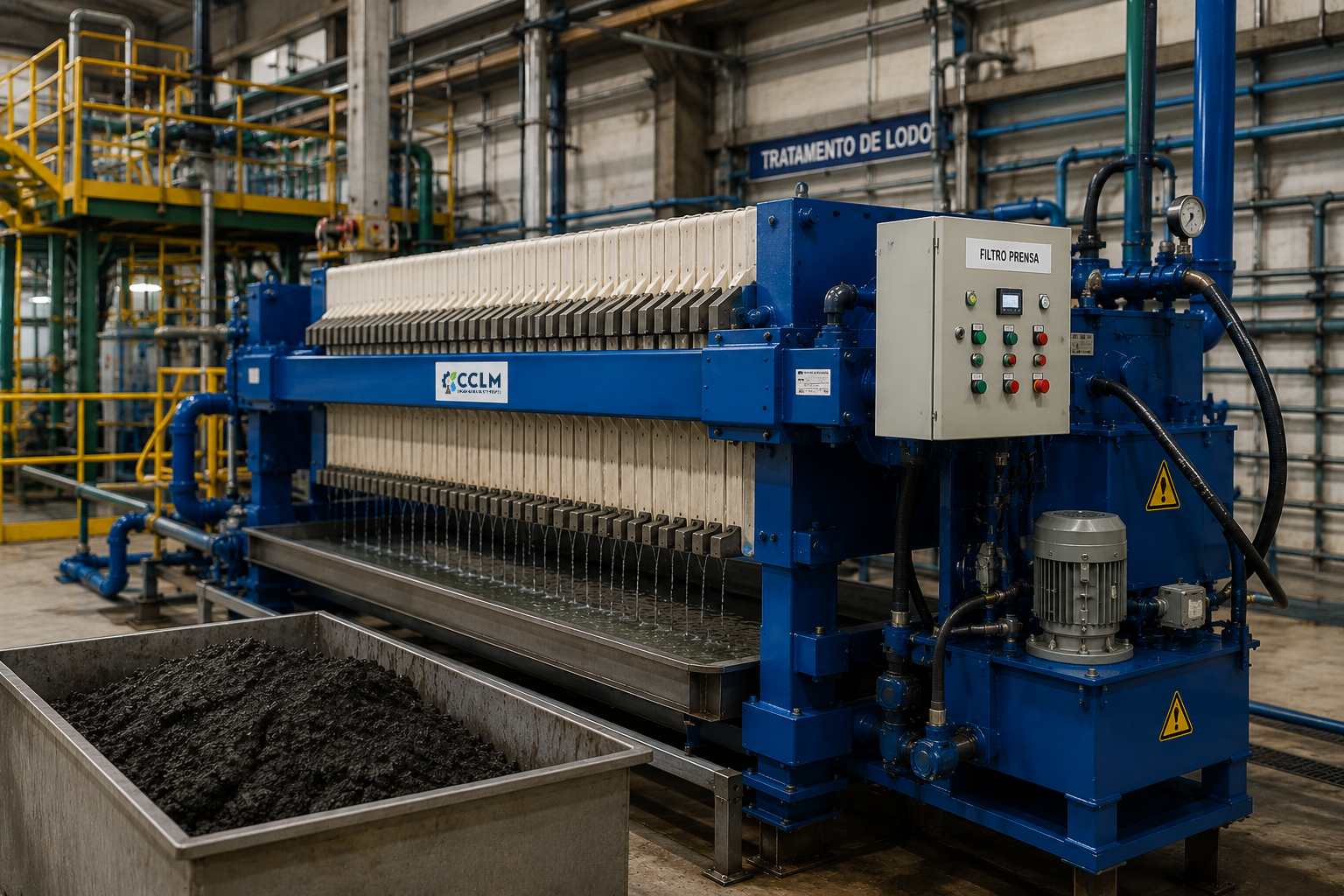
The smaller the volume of sludge, the lower the cost for your company.
The CCLM Filter Press was developed to maximize sludge dewatering, reduce transportation and final disposal costs, and increase the operational efficiency of your treatment plant.