
Dissolved Air Flotation (DAF/FAD)
Remove oils, greases, and suspended solids with high efficiency and reduce treatment costs.
The CCLM Dissolved Air Flotation (DAF/FAD) system was developed to promote the efficient separation of contaminants present in industrial effluents, using microbubbles of dissolved air that adhere to flocs and low-density contaminants, promoting their flotation.
It is a widely used solution in physical-chemical treatment systems and wastewater treatment plants that require high efficiency, smaller footprint, and environmental compliance. Each system is sized according to the flow rate, effluent composition, and client objectives.
Applications: Refrigeration plants, Dairies, Food industries, Chemical industries, Petrochemicals, Metallurgy, Electroplating, Vehicle washes, Paper and pulp, Mining, Beverage industries, Oily effluent treatment and Water reuse systems.
Available Models
- DAF Compact
- DAF Industrial
- DAF for Oily Effluents
- DAF for Reuse
- Automated Systems.
Each piece of equipment is sized according to the flow rate, contaminant load, treatment objectives, and effluent characteristics: contact us!
How does the DAF float system work?
- The effluent receives the dosage of chemicals (when necessary).
- The system generates microbubbles of dissolved air.
- The microbubbles adhere to the contaminants.
- The floating solids are carried to the surface.
- The floated sludge is automatically removed by surface scrapers.
- The clarified effluent then proceeds to the next stages of treatment or is disposed of.
Why invest in a Dissolved Air Flotation (DAF) system?
Not all solids present in wastewater settle naturally. In many industrial processes, oils, greases, light particles, and fine solids remain in suspension, hindering treatment and compromising compliance with environmental standards.
Dissolved Air Flotation (DAF) uses microbubbles of air to promote the separation of these contaminants, providing high removal efficiency, reducing the organic load, and improving the performance of subsequent treatment steps.
The result is a higher quality effluent, greater efficiency in subsequent treatment stages, and increased operational reliability.
Testimony
"After implementing the DAF system at CCLM, we significantly improved effluent quality and reduced operational costs."
— Industrial Manager
8 Benefits for your operation:
- High efficiency in removing oils, greases and suspended solids: Micro air bubbles promote rapid flotation of contaminants, significantly improving the quality of the treated effluent.
- Reduction of organic load and suspended solids: Decreases the concentration of solids and organic matter before the biological stages or disposal, increasing the efficiency of the treatment.
- Improved performance in subsequent stages: Reduces the load on filters, membranes, biological systems, and other equipment, increasing their lifespan and efficiency.
- Potential for optimizing chemical consumption: Efficient flotation can contribute to optimizing the use of coagulants and flocculants, reducing operational costs.
- Compact equipment: Designed to offer high treatment capacity while occupying a small installation area.
- Automated operation: It can be integrated with PLCs, sensors, and supervisory systems, providing greater control and operational stability.
- Customized design: Each DAF Flotation Unit is developed according to the flow rate, effluent characteristics, and specific needs of each application.
- Excellent cost-benefit ratio: Reduces costs associated with treatment, disposal, and maintenance, providing greater operational efficiency throughout the equipment's lifespan.
| Lamellar Decanter | DAF float |
|---|---|
| Remove settleable solids | Removes light solids, oils and greases. |
| Ideal for denser particles. | Ideal for low-density particles and emulsified oils. |
| Lower energy consumption | Ideal for effluents containing oils, greases, and low-density solids. |
| Widely used in water treatment plants and physicochemical treatment. | Widely used in industrial and oily wastewater. |
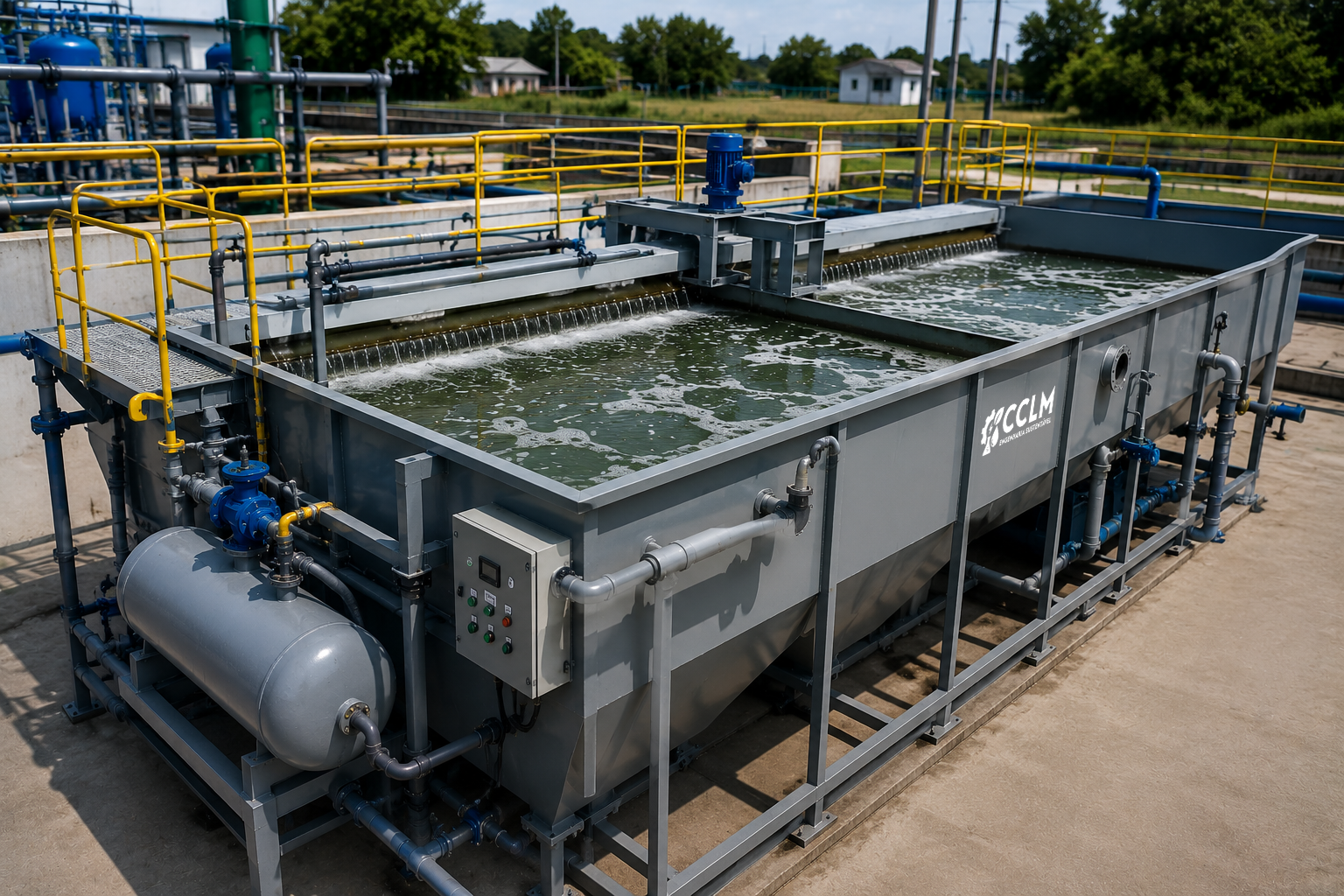
Effective treatment begins with the proper removal of contaminants present in the effluent.
The CCLM Dissolved Air Flotation system was developed to remove oils, greases, suspended solids, and organic matter with high efficiency, contributing to environmental compliance, reduced operating costs, and improved performance of the entire treatment system.