Anionic Resin: Removal of Negative Ions for High Purity Water
An effective solution for demineralization and water treatment in industrial processes.
In various industrial processes, the presence of dissolved ions can compromise water quality, reduce equipment efficiency, and affect production performance. While cationic resins remove cations, anionic resins complement the process by removing anions such as chlorides, sulfates, nitrates, bicarbonates, and silicates.
The result is demineralized or deionized water, suitable for applications requiring a high degree of purity, such as boilers, laboratories, pharmaceutical and electronics industries, and other industrial processes.
Available models
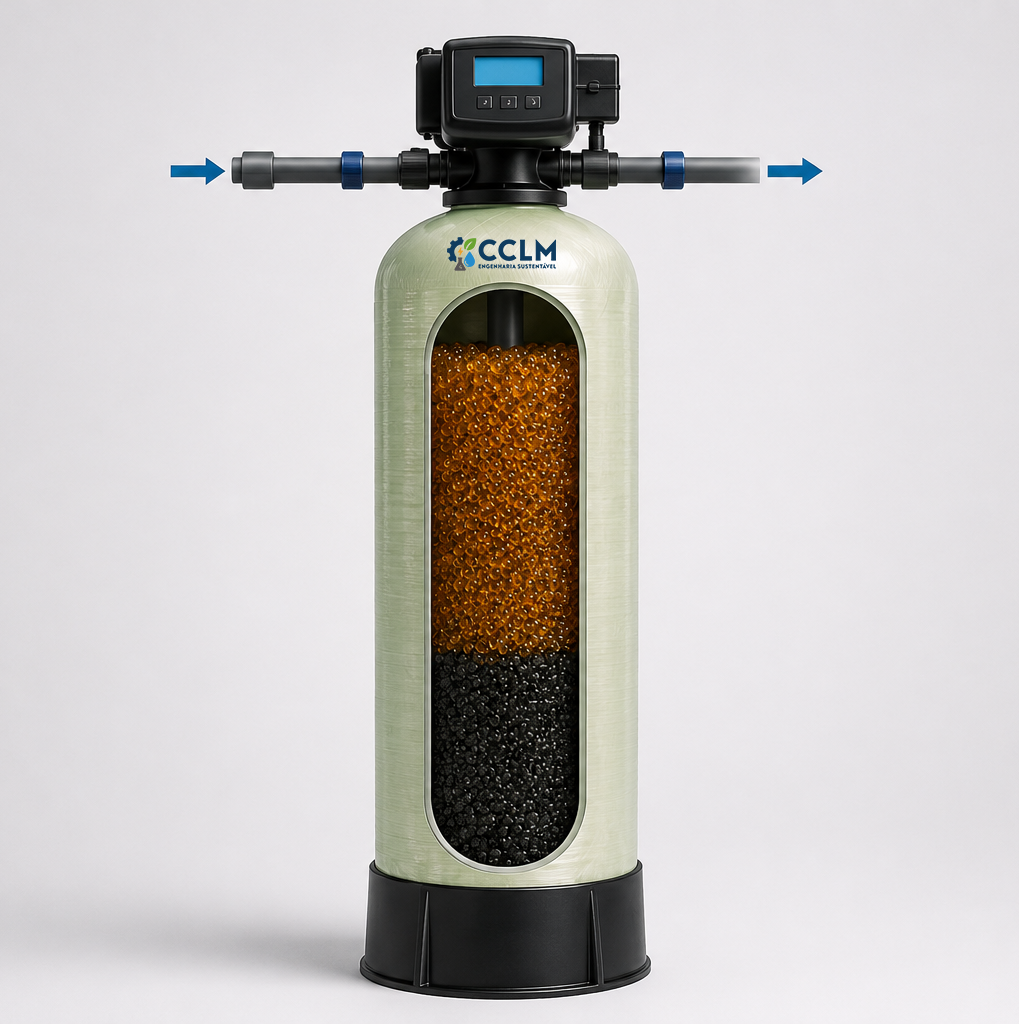
We supply high-performance anionic resins, available in different ion exchange capacities, particle sizes, and operational characteristics, compatible with mixed-bed, double-bed, and in-situ or off-site regeneration systems, depending on the application and treatment system.
How does anionic resin work?
Water passes through the anionic resin bed, where the ion exchange process occurs. During this stage, dissolved anions present in the water—such as chlorides, sulfates, nitrates, bicarbonates, and silicates—are retained by the resin and replaced by hydroxyl ions (OH⁻). When combined with hydrogen ions (H⁺) from the cationic resin, they form water molecules (H₂O), producing highly pure demineralized water.
Applications
- Industrial boilers
- Laboratories
- Pharmaceutical industry
- Cosmetics
- Food and drinks
- Electronics
- Reverse Osmosis Systems
- Demineralized water systems
- Mixed beds
- Production of deionized water (DI)
What is anionic resin used for?
Used in ion exchange demineralization systems and as a complementary step in reverse osmosis systems when final water polishing is required. It acts in the removal of negative ions (anions) that can cause:
- Corrosion and scaling in equipment, depending on the chemical composition of the water;
- Scale buildup in boilers and heat exchangers;
- Contamination of products (pharmaceuticals, cosmetics and food);
- Increased water conductivity, compromising processes that require a high degree of purity.
Testimony
"CCLM provided us with a high-performance anionic resin demineralization system. The water quality for our boilers has improved dramatically, and we've reduced maintenance costs. I highly recommend them."
Chemical Industry
Main benefits of Anionic Resin:
- High-purity water for critical industrial applications.
- Efficient removal of dissolved anions
- Protection of boilers, piping and heat exchangers.
- Possibility of regeneration, increasing the lifespan of the resin.
- Excellent performance in demineralization systems.
- Ideal complement for Reverse Osmosis and Mixed Bed.
Ready to improve your water quality and protect your equipment?
The presence of dissolved ions can compromise industrial processes, reduce equipment lifespan, and increase operating costs. CCLM provides high-performance anionic resins and customized solutions for demineralization systems, ensuring high water purity and greater operational reliability. Each system is sized according to water quality and application purity requirements.