
Activated Carbon for Water Treatment
Efficient removal of chlorine, odors, organic compounds, and contaminants from water.
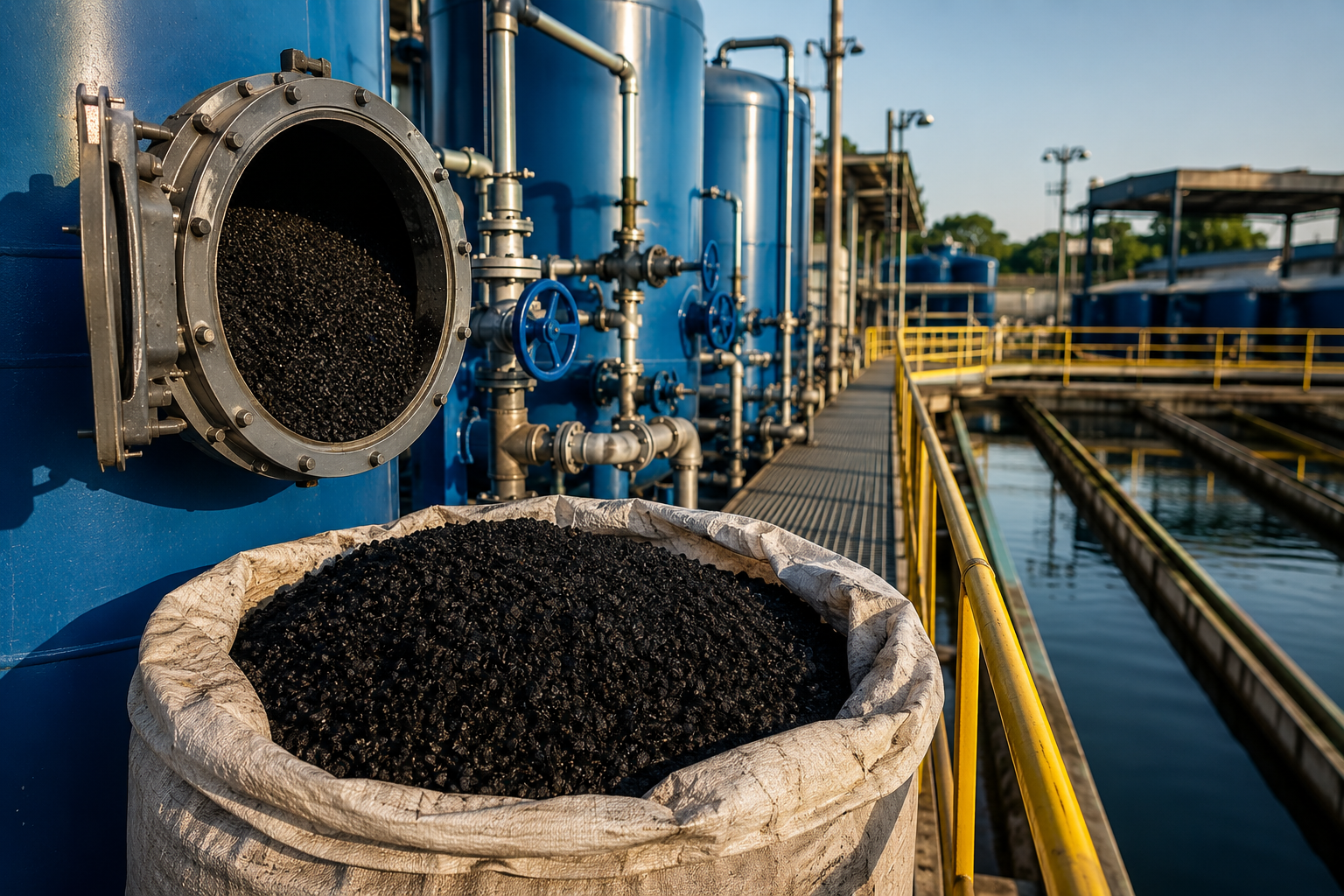
Activated carbon is one of the most widely used filter media in water treatment systems due to its high adsorption capacity. Its highly porous structure allows it to adsorb organic compounds, residual chlorine, odors, undesirable tastes, and various dissolved contaminants present in the water...
At CCLM, we supply high-quality activated carbon for water treatment systems, water treatment plants, reuse systems, pressurized filters, and industrial processes that require water with a high standard of quality.
Available in different particle sizes and specifications, activated carbon is sized according to the needs of each project.
Applications
Activated carbon can be used in Water Treatment Plants (WTPs), Water Reuse Systems, Pressurized Filters, Industries (Food, Pharmaceutical and Chemical), Hospitals, Laboratories, Hotels, Condominiums, Pre-treatment for Reverse Osmosis and final polishing of treated water.
How does activated charcoal work?
Activated charcoal has millions of micropores that significantly increase its surface area.
When water passes through the filter medium, organic compounds, residual chlorine, substances responsible for odors, tastes, color, and various dissolved contaminants are adsorbed onto the surface of the activated carbon. This process makes activated carbon a widely used solution in various water treatment systems.
| Benefit | Description |
|---|---|
| High adsorption capacity | Removes organic compounds, residual chlorine, odors, tastes, and various dissolved impurities from water. |
| It improves water quality. | It provides cleaner, clearer water that is more suitable for various industrial processes. |
| Odor and taste reduction | It eliminates substances responsible for sensory changes in water. |
| Removal of residual chlorine | It protects equipment and increases the efficiency of processes that require chlorine-free water. |
| Protection of posterior systems | It reduces the contaminant load before ultrafiltration and reverse osmosis, increasing their lifespan. |
| High durability | Material developed for continuous operation with excellent performance when correctly sized. |
| Versatility of applications | It can be used in various industrial and commercial sectors, as well as in supply systems. |
| Excellent value for money. | It helps reduce operational costs and improve the overall efficiency of treatment. |
Available Particle Sizes
CCLM supplies activated carbon in different particle sizes and technical specifications, selected according to the type of application, flow rate, and water quality. Our technical team assists in choosing the ideal material for each project.
Target Segments
Activated carbon can be used in various sectors, including: Food, Beverage, Pharmaceutical, Cosmetics, Hospitals, Laboratories, Hotels, Shopping Centers, Condominiums, and Sanitation Companies.
Compatible with: Automatic Pressurized Filter, Potable Water Treatment Plant, Wastewater Treatment Plant, Ultrafiltration, Reverse Osmosis, Filter Sand, Filter Gravel, and Anthracite Coal.
When should activated charcoal be replaced?
Over time, activated carbon loses its adsorption capacity due to saturation of the micropores.
The main signs are:
- Return of odors or tastes in the water;
- Presence of residual chlorine after the filter;
- Reduced treatment efficiency;
- Increased levels of contaminants in treated water.
- Periodic replacement ensures greater system efficiency and preserves subsequently installed equipment.
| Feature | Information |
|---|---|
| Material | Selected mineral activated carbon |
| Function | Adsorption of organic compounds, chlorine, odors and flavors. |
| Granulometrias | Various options depending on the project. |
| Installation | Pressurized filters and activated carbon filters |
| Applications | Water treatment plants, reuse, industrial processes and water polishing. |
| Supply | According to the flow rate and project specifications. |
Why choose CCLM Activated Carbon?
- High adsorption capacity: Highly porous structure that promotes the efficient removal of organic compounds, residual chlorine, odors, tastes, and other impurities present in water.
- High efficiency in improving the quality of treated water: Contributes to obtaining cleaner, clearer water that is suitable for different industrial processes and reuse applications.
- Protection of downstream systems: Reduces the contaminant load before ultrafiltration and reverse osmosis, helping to increase the lifespan of these systems.
- Compatible with various filtration systems: Can be used in pressurized filters, multimedia filters, water treatment plants, reuse systems, and industrial processes that require high water quality.
- Long service life and excellent operational performance: When properly sized and operated, it maintains high efficiency for extended periods, reducing maintenance interventions and costs.
- Versatile solution for different applications: Available in different particle sizes and specifications to meet the needs of various industrial segments and treatment systems.
Ensure higher quality water for your process.
CCLM supplies high-quality activated carbon for water treatment systems, reuse, and industrial processes, offering technical support to specify the most suitable filter medium for each project's needs.