Preventive Maintenance for Water and Wastewater Treatment Systems
Increase operational reliability, reduce failures, and preserve the performance of your treatment systems.
Preventive maintenance is essential to ensure the continuous and safe operation of water and wastewater treatment systems. Periodic inspections, preventive adjustments, and scheduled component replacement help reduce failures, preserve equipment performance, and increase operational reliability.
The absence of preventive maintenance can result in unscheduled shutdowns, reduced treatment efficiency, increased operating costs, and a greater need for corrective interventions.
CCLM develops customized preventive maintenance plans for water treatment plants, wastewater treatment plants, and water and effluent treatment systems, taking into account the characteristics of the operation, the criticality of the equipment, and the operating routine of each client.
Periodic inspections include equipment evaluation, operational checks, preventive adjustments, scheduled component replacement, and the issuance of technical reports, contributing to greater operational safety and system availability.
Our methodology may include:
- Scheduled technical inspections: Periodic evaluation of equipment and systems for the preventive identification of wear and non-conformities.
- Operational monitoring: Tracking the station's performance to identify opportunities for improvement and anticipate potential failures.
- Corrective maintenance (when necessary): Interventions to restore the system's functionality when faults are identified during inspections or operation.
Services offered:
- Scheduled technical inspections
- Preventive maintenance
- Operational monitoring
- Adjustments and calibrations
- Preventive replacement of components
- Corrective maintenance
- Issuance of technical reports
- Recommendations for operational improvements
- Component lubrication (if applicable)
- Technical cleaning of equipment
What do we check during maintenance?
- Pumps
- Engines
- Electrical panels
- Instrumentation
- Dosing pumps
- Piping
- Valves
- Sensors
- Flow meters
- pH meters
- Automation systems
- Chemical dosing systems
How does preventive maintenance work?
Maintenance plans are defined according to the characteristics of the station and may include periodic visits, technical inspections, operational monitoring, functional tests, preventive adjustments, and monitoring of equipment performance.
After each technical visit, CCLM issues a report detailing the inspections performed, recommendations, and a history of the interventions carried out.
Success story
"CCLM implemented the preventive maintenance plan at our wastewater treatment plant two years ago. Before, we had unexpected shutdowns at least once every six months. We have significantly reduced the occurrence of unexpected shutdowns. Preventive inspections and component replacements give us unparalleled operational safety." — Metalworking Industry
8 benefits of preventive maintenance
- Greater operational availability: Reduces the occurrence of unexpected failures and increases system reliability.
- Longer equipment lifespan: Regular inspections and preventative replacements help preserve pumps, motors, valves, and other components.
- Reduced maintenance costs: Preventive maintenance can reduce the need for corrective interventions and minimize emergency costs.
- Improved treatment performance: Properly regulated equipment in good working order contributes to stable operation.
- Greater operational compliance: Periodic monitoring helps control processes and identify operational deviations.
- Planning interventions: Maintenance can be scheduled according to the operation's routine, reducing impacts on production.
- Technical reports and operational history: Record of inspections performed, recommendations, and equipment history.
- Customized maintenance plan: A maintenance plan developed according to the equipment, process, and criticality of each system.
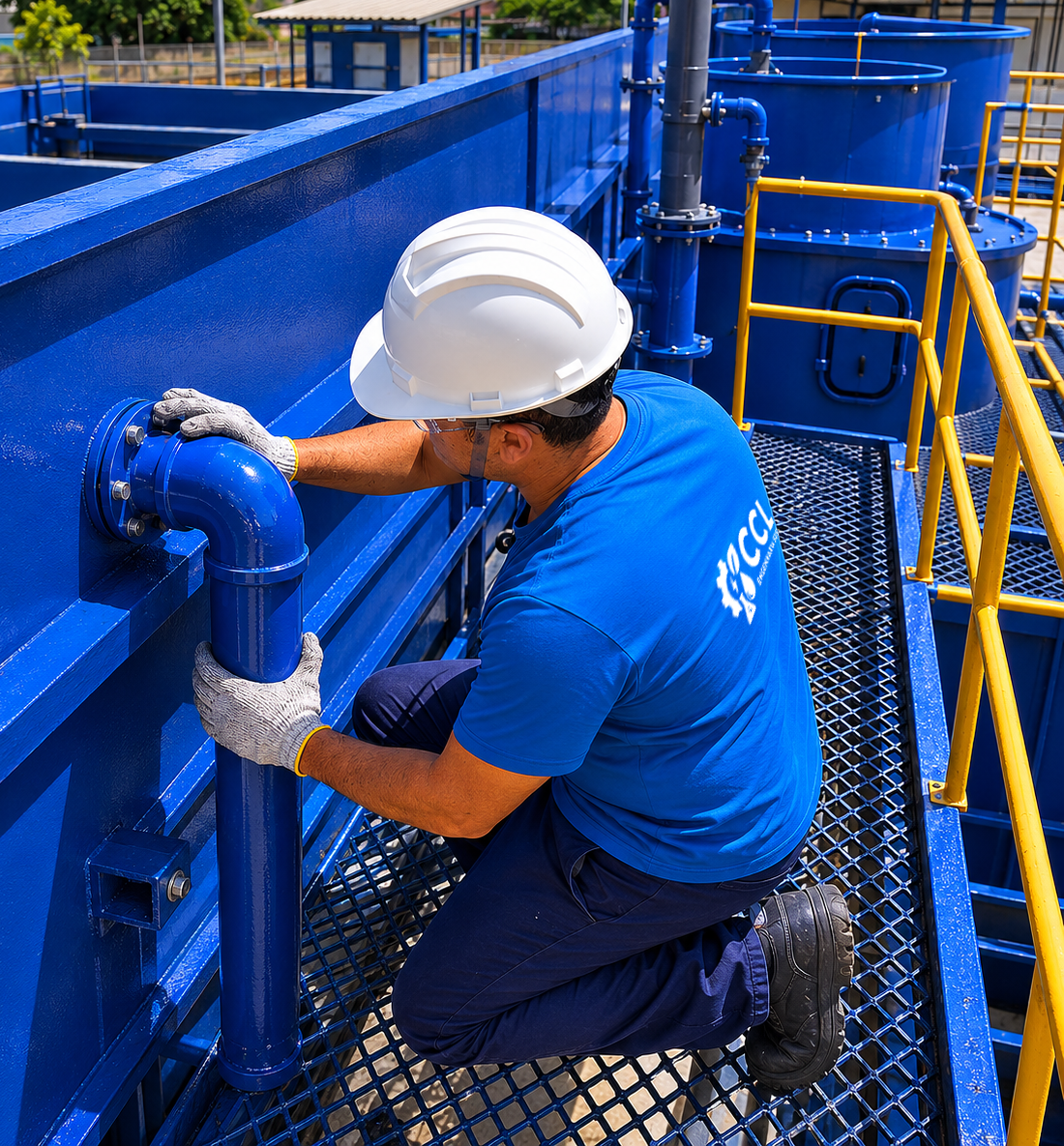
Preventing failures is more economical than correcting them. Preventive maintenance contributes to increased operational reliability, preserving equipment performance, and reducing the occurrence of unexpected failures. CCLM develops customized plans to ensure greater safety, efficiency, and availability of water and wastewater treatment systems.