
Industrial Dosing Pump for Water and Wastewater Treatment
Precise chemical dosing to reduce costs, increase efficiency, and ensure safer processes.
In water and wastewater treatment systems, incorrect chemical dosage can lead to several problems: wasted resources, increased operating costs, reduced treatment efficiency, and even environmental non-compliance.
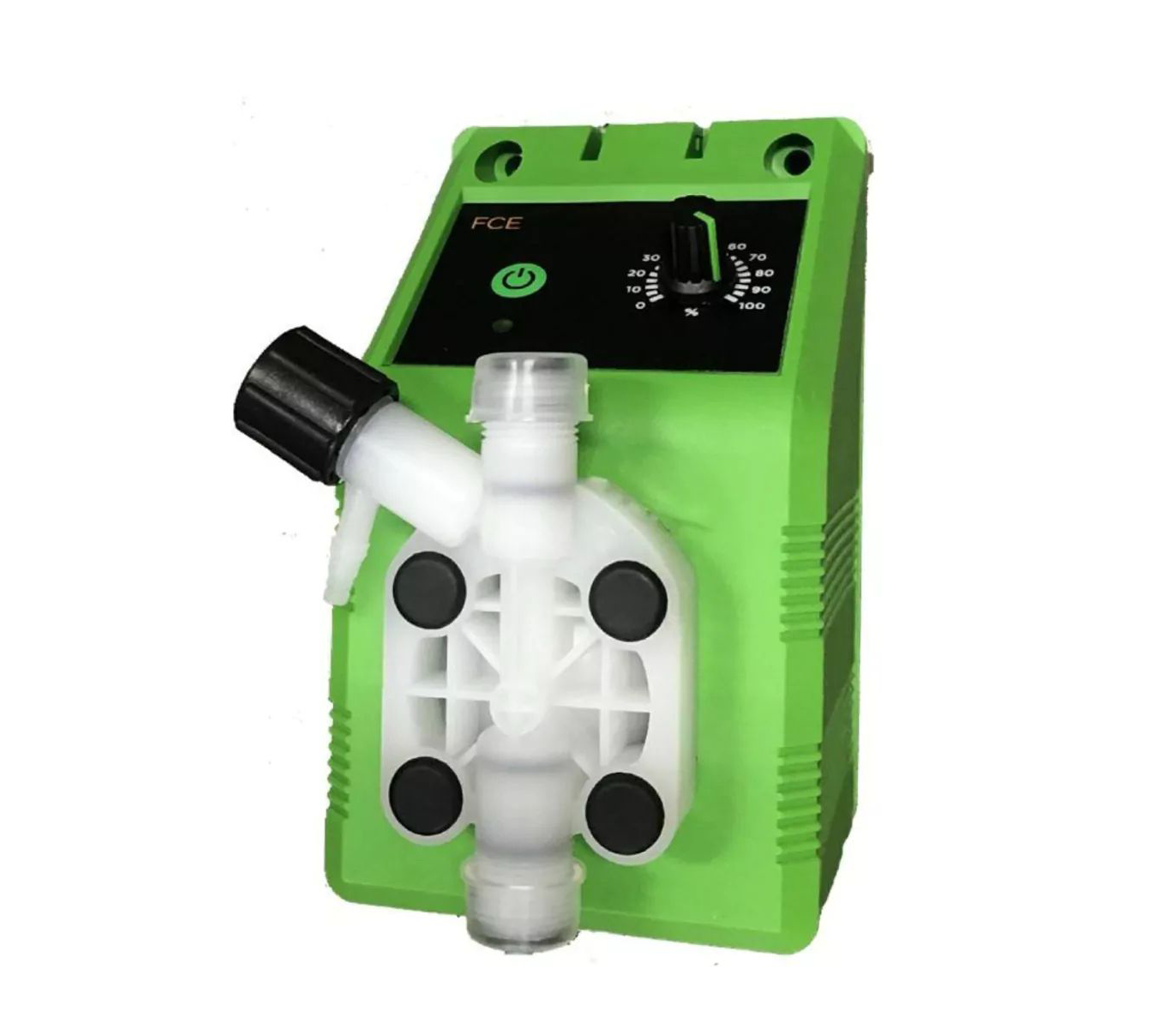
CCLM's Dosing Pumps are developed to ensure precision, safety, and reliability in the application of chemical products in industrial processes, water treatment plants, wastewater treatment plants, reuse systems, cooling towers, boilers, and various other applications.
With precise flow control and excellent repeatability, the equipment allows for the correct application of coagulants, polymers, hypochlorite, PAC, acid, caustic soda, and other products used in treatment processes.
How does a dosing pump work?
The dosing pump draws the chemical product directly from the storage tank and injects it into the piping or process tank at a controlled flow rate. Dosing can be controlled manually or automatically via PLCs, sensors, flow meters, and supervisory systems. Each dosing pump is sized according to the chemical product, flow rate, working pressure, and level of automation required.
Types of Dosing Pumps
CCLM sizes metering pumps according to the chemical product, flow rate, working pressure, and application. Depending on the process, diaphragm, electromagnetic, motorized, or other technologies compatible with the operation can be used.
Why invest in a dosing pump?
Because chemicals represent a significant portion of the operating costs of a treatment plant.
Inadequate dosing leads to waste, reduces system efficiency, and increases operating costs.
With a properly sized dosing pump, your company ensures greater process control, savings on supplies, and consistent results.
8 benefits of a dosing pump for your operation:
- Precise and consistent dosage: Applies the exact amount of chemical product needed for each process, ensuring greater treatment efficiency.
- Reducing chemical consumption: Prevents waste and optimizes the use of coagulants, polymers, hypochlorite, PAC, caustic soda, acids, and other reagents.
- Greater operational stability: Maintains uniform dosage even in continuous processes, reducing fluctuations in treatment quality.
- Lower operating costs: Savings on chemicals and reduced rework contribute to lower operating costs.
- Automated operation: Can be integrated with PLCs, sensors, flow meters, and supervisory systems for automatic dosing control.
- High precision and repeatability: Designed for continuous operation in industrial environments, offering excellent repeatability and accuracy.
- Customized design: The pump is specified according to the chemical product used, flow rate, pressure, and the needs of each application.
- Long service life: Greater process efficiency, less waste, and a longer equipment lifespan make the investment highly advantageous.
How to choose the ideal dosing pump?
Our team considers several factors to specify the most suitable equipment:
- Chemical product used;
- Required flow rate;
- Work pressure;
- Material compatible with the fluid;
- Type of control (manual or automatic);
- Integration with existing automation.
Available Models
📌 Customized sizing based on flow rate, chemical product, and operating pressure.
Testimony
"The installation of the dosing pumps supplied by CCLM brought more precision to our process. We reduced the consumption of chemicals and increased the operational stability of the station."
— Industrial Utilities Coordinator
| Chemical Inputs | Application |
|---|---|
| Sodium hypochlorite | Water disinfection |
| PAC | Coagulation |
| Aluminum sulfate | Clarification |
| Polymer | Flocculation |
| Caustic soda | pH correction |
| Sulfuric acid | pH correction |
| Ferric chloride | Coagulation |
| Antiespumante | Foam control |
Applications
Dosing pumps can be used in Potable Water Treatment Plants, Compact Water Treatment Plants, Sanitary Wastewater Treatment Plants, Industrial Wastewater Treatment Plants, Chemical Wastewater Treatment Plants, Organic Wastewater Treatment Plants, Reuse Systems, Reverse Osmosis, Ultrafiltration, Cooling Towers and Boilers.
More precise dosing means less waste and greater efficiency for your operation.
Incorrect dosing can increase costs, compromise treatment, and generate rework. CCLM designs custom dosing pumps to ensure maximum precision, cost savings, and operational efficiency.